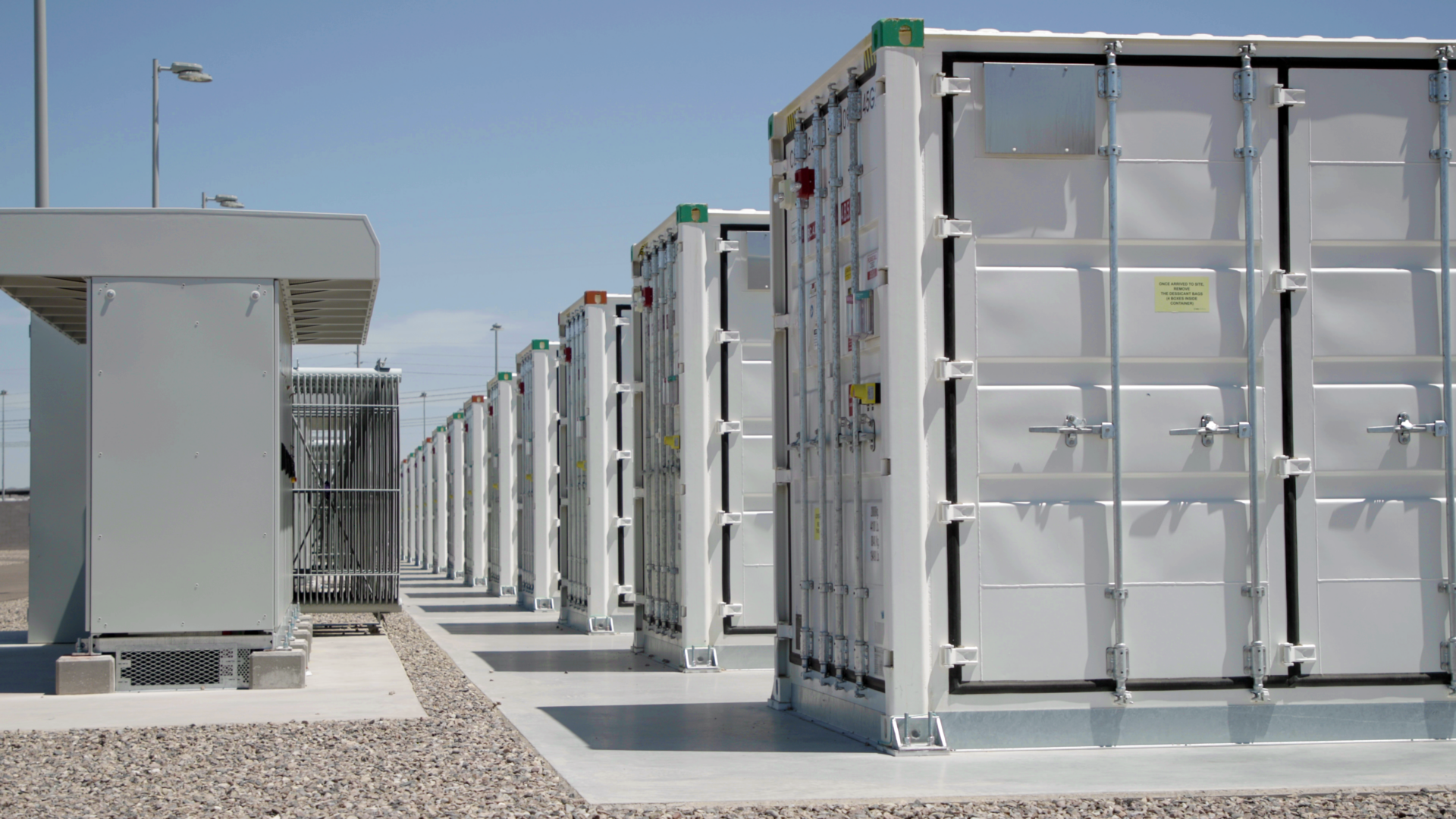
Public Awareness and Perceptions of Battery Energy Storage Systems
GoodPower and YouGov surveyed 1,529 registered voters nationally from July 8 to July 16, 2025, to understand public knowledge and attitudes about battery energy storage systems (BESS). The survey oversampled California (n=315) and Texas (n=318), the top two states for installed battery energy storage capacity. American voters know very little about the technology, but once they learn the basics of how it works, they’re likely to support building facilities in their communities. Some worry about fire risks, and most people don’t yet know much about the environmental benefits of battery storage. Opposition isn’t widespread, which leaves room to educate the public about a technology that’s vital to the renewable energy transition.
Key Findings
Awareness is low, and support rises once people learn the basics.
Just 19% of respondents said they know a great deal or some about battery storage, while 55% said they know nothing at all. Low awareness isn’t the same as opposition, though. After reading a short description of how battery storage works, 77% of respondents supported building facilities in their community, a majority that held across education, income, and political party, though Democrats (85%) were more supportive than Republicans (69%).
People trust battery storage to boost reliability and the economy, but are less sure about costs.
A large majority believe battery storage will improve grid reliability (85%) and spur local economic development (82%). Fewer, though still a majority, agreed that it lowers energy costs (72%), the weakest of the three beliefs tested and a signal that cost savings need more explanation to land. Democrats were more likely than Republicans to believe battery storage can lower prices (83% vs. 77%) and improve grid reliability (91% vs. 83%), though a large majority of Republicans held both beliefs too.
Voters broadly support federal investment in battery storage.
70% of voters support federal investment in the battery storage industry. That’s a large enough majority that rolling back programs or cutting funding could prove unpopular once voters find out.
Fire concerns are real but not acute, and environmental benefits are largely unknown.
Concern about battery storage fires is salient without being acute. 57% of respondents nationally were somewhat or very worried, a number that rose to 66% in California, likely reflecting coverage of the Moss Landing battery fire, and fell to 52% in Texas. Democrats were significantly less worried about fires than Republicans. On the environment, misinformation isn’t widespread, but neither is understanding: just 30% view battery storage as environmentally friendly, 26% see it as bad for the environment, and the largest group, 44%, aren’t sure either way.
Texas and California differ, but the national picture holds steady.
Beyond the fire-concern gap in California, national, California, and Texas respondents looked similar on most measures. One exception: Texans showed somewhat greater support for building battery storage facilities, which may reflect a broader pro-development attitude in the state.